Guides
Retool SQL Transactions: What Works and What Doesn't
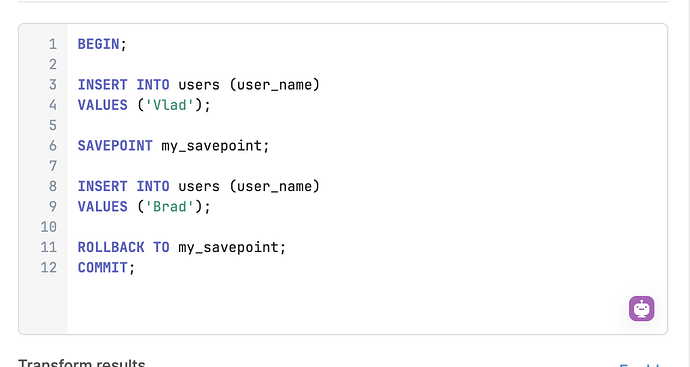
If you've tried to use Retool SQL transactions to safely update multiple tables at once, you've probably hit a wall. Retool lets you write raw SQL directly against your database, but full transactional support — the kind where five queries either all succeed or all roll back — is not natively supported in the way most developers expect. Here's exactly what's going on, what limited support does exist, and the production-ready workaround you should be using right now.
Why Retool Doesn't Support SQL Transactions Natively
The core problem is architectural. In Retool, each query opens and closes its own connection to the database. SQL transactions require a connection to stay open across multiple statements — BEGIN, your queries, then COMMIT or ROLLBACK. Since Retool doesn't maintain persistent, stateful connections between queries, there's no way to hold a transaction open across two separate Retool query objects.
There's a second constraint on top of that: Retool's parameterized queries — the ones that safely escape user input using {{ }} syntax — don't support multiple SQL statements in a single query block. Parameterized queries are processed one statement at a time, which means you can't write BEGIN; UPDATE ...; INSERT ...; COMMIT; inside a single parameterized Retool query and expect it to work as a transaction.
According to Retool's own team, support for transactions across multiple Retool queries is likely never coming. Support for transactions within a single Retool query with parameters is technically possible but hasn't been prioritized on the roadmap.
What Actually Works Today
There is one narrow case where multi-statement transactions do work in Retool: non-parameterized queries. If you disable parameterized mode on a query, you can write a full transaction block as a single SQL string. In practice, this is rarely useful — non-parameterized queries mean you're building SQL by string concatenation, which opens you up to SQL injection and makes dynamic inputs messy to handle safely. It's not a real solution for production apps.
For anything involving user input or dynamic values, you need a different approach entirely.
The Right Workaround: Stored Procedures with a JSONB Argument
The most robust pattern for handling Retool SQL transactions is to push the transaction logic into a stored procedure on your database and call it from Retool with a single parameterized query. This keeps your transaction "close to the metal," eliminates the multi-connection problem entirely, and gives you full BEGIN/COMMIT/ROLLBACK semantics inside the database where they belong.
Here's how to implement this pattern step by step:
- Step 1 — Prepare your payload in a JS Query. Use a Retool
JS Queryor transformer to assemble all the data you need to write into a single JavaScript object. For example, if you're depleting stock, creating accounting entries, and logging movements, build one object with all those fields. - Step 2 — Write a stored procedure that accepts a JSONB argument. Define your procedure in PostgreSQL using
plpgsqlas the language. Accept a singleJSONBparameter (e.g.,payload JSONB) so you only need one Retool query argument. Inside the procedure, use->and->>operators to extract values from the JSON, and make sure you cast them to the correct data types explicitly — loose typing inside procedures will cause hard-to-debug errors. - Step 3 — Wrap all your DML statements inside a transaction block. Inside the procedure body, open with
BEGIN, execute all yourUPDATE,INSERT, andDELETEstatements, and close withCOMMIT. Add anEXCEPTIONblock to handle rollbacks if anything fails mid-execution. - Step 4 — Call the procedure from a single Retool SQL query. In Retool, create one SQL query that calls your procedure:
SELECT my_procedure({{ JSON.stringify(jsQuery.data) }}::jsonb);. This is a single parameterized query, so it works safely with Retool's connection model.
Why Not Use Retool Workflows or Chained Queries?
It's tempting to chain Retool queries using event handlers — run query1, on success trigger query2, and so on. This is not a transaction. If query3 fails after query1 and query2 have already committed, your database is left in a partially written state. For anything involving financial data, inventory, or any multi-table write where consistency matters, chained queries are a source of silent data corruption bugs, not a solution.
Retool Workflows have the same problem — whether queries run in parallel or serially, there's no rollback mechanism if one step fails partway through.
The Stored Procedure Pattern in Summary
- Assemble your full write payload as a JS object in a
JS Query - Pass it as a single
JSONBargument to a stored procedure - Handle
BEGIN,COMMIT, andROLLBACKinside the database where they're reliable - Use
plpgsqlfor PostgreSQL and define all data types explicitly inside the procedure - Call the procedure from one single parameterized Retool SQL query
This pattern isn't a workaround in the hacky sense — it's actually the architecturally correct place to put transaction logic. Databases are built to handle this. Retool is built to be a UI layer. Keeping complex, multi-step write operations inside a stored procedure means your transaction is faster, more reliable, and completely independent of anything that could go wrong at the Retool layer. If you need Retool SQL transactions that are bulletproof in production, this is the way to do it.
Ready to build?
We scope, design, and ship your Retool app — fast.